
Applying Water Ripple Stainless Steel Sheets in Hospitality Ceilings and Feature Walls
Water ripple stainless steel sheets are decorative stainless steel panels with a three-dimensional wave surface that breaks reflected light into moving highlights instead of a single flat mirror image. In high-end hospitality interiors they are used above all on two surfaces: ceilings, where the pattern spreads light across a large plane, and feature walls, where it creates a focal surface in lobbies, corridors and lift lobbies.
This application guide covers the JYF-04 water ripple stainless steel sheet range from JYF Metal (Foshan Jinyifan Metal Products Co., Ltd.), a stainless steel decorative products manufacturer established in 2013 in Foshan, Guangdong, China. It sets out which grades, thicknesses, panel sizes, ripple scales and colours can be ordered for hospitality interiors, and then walks through the specification steps that decide whether a ripple ceiling or feature wall performs as designed.
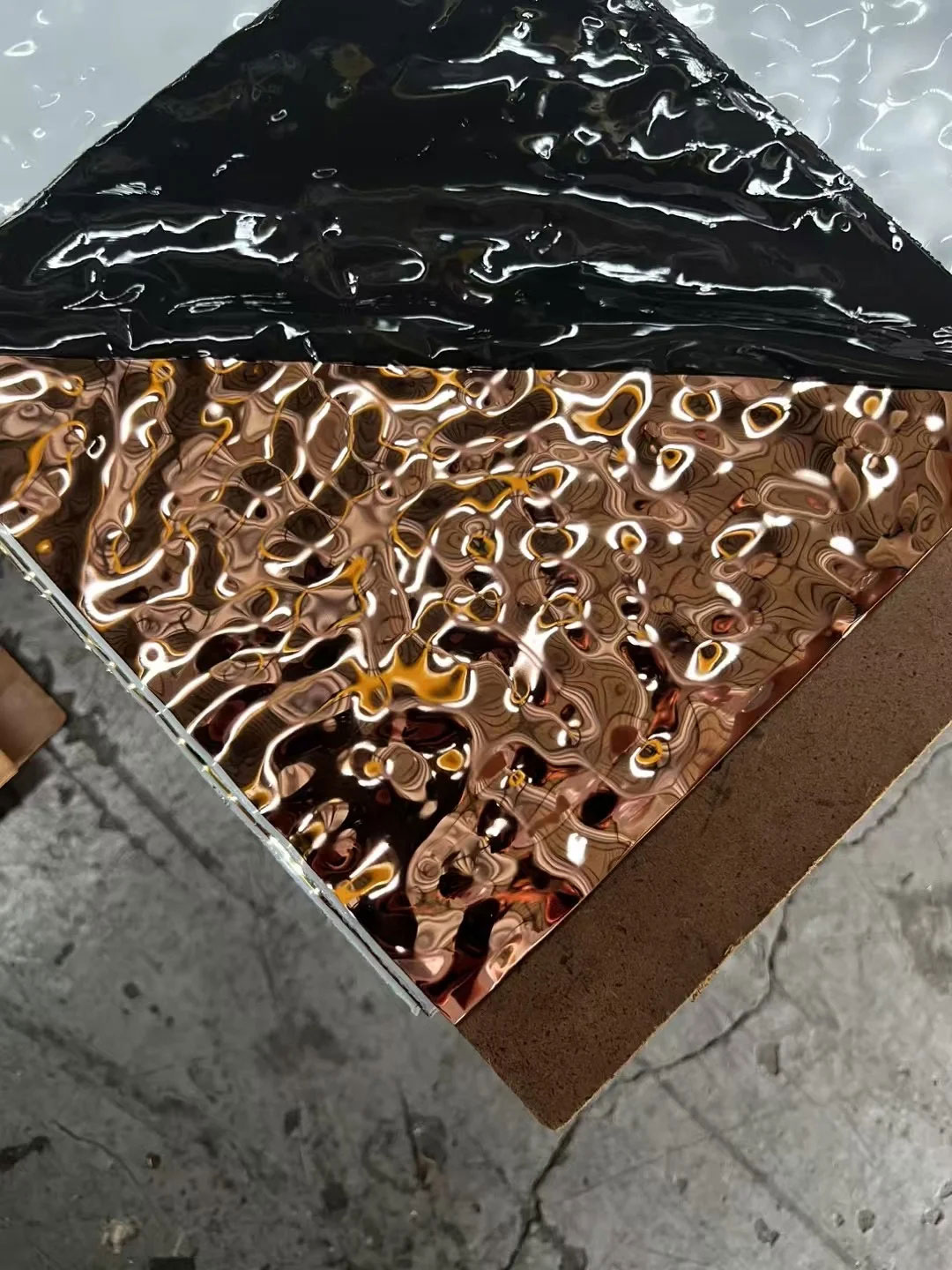
JYF-04 water ripple sheet at a glance
Why Ripple Surfaces Are Harder to Specify Than They Look
The finish is approved in minutes; the consequences are installed over weeks. Whether a ripple ceiling reads as one continuous metal plane or as a visible grid of slightly mismatched panels is decided before production starts — by the grade the sheet is rolled from, its thickness, the standard panel size the layout is built on, and whether the ripple pattern can be aligned across joints.
JYF Metal's application data for decorative sheet systems lists the requirements that recur across wall, ceiling, column and lift decoration projects: corrosion resistance, scratch resistance, colour stability and custom textures, together with matched elements such as frameworks, honeycomb substrate and lighting systems. In practice, those items resolve into five specification risks.
- Flatness across joints. JYF's project record for a French ceiling installation highlights exceptional flatness as the condition for seamless, precise joint installation. Panel flatness therefore has to be specified as a production requirement rather than assumed at installation stage.
- Grade versus environment. Hospitality surfaces sit above entrances, spa areas and coastal frontages. JYF's application data for decorative cladding and panel systems lists corrosion resistance, waterproofing and fire resistance among project requirements, and names humid or coastal environments and high-traffic areas as working conditions.
- Colour continuity. Colour consistency is listed as a standard requirement for wall, ceiling and edge systems, which is why panels for one elevation are best produced and shipped as a single batch.
- Thickness against span and substrate. The JYF-04 range runs 0.5–2.0 mm, narrower than the mirror, brushed and sandblasted sheet ranges in the same catalogue (0.5–3.0 mm). Thickness has to match how the panel is fixed — on a dry-hung framework or bonded to a prepared substrate — and the module size of the ceiling or wall field.
- Light, pattern and viewing distance. A ripple surface changes with the light it receives: JYF's French project record describes a dynamic, shimmering water-ripple effect under light, and the Korean project record describes a smooth, reflective wave-patterned surface that creates a modern, dynamic look. Because the pattern behaves differently under cove lighting, spot lighting and daylight, ripple scale is best confirmed on a physical sample rather than on a drawing.
Industry Background: Where Decorative Stainless Demand Is Going
The global metal decorative panel market was valued at USD 3.5 billion in 2024 and is projected to reach USD 5.8 billion by 2032, according to SMR's Metal Decorative Panel Market Outlook. Within construction, stainless steel demand is concentrated in architectural cladding and facade applications, particularly for 300-series grades, according to Market Research Future — the same family that covers the SS304 and SS316 grades used in decorative sheet production.
Supply is concentrated as well. Asia-Pacific accounted for approximately 69% of global stainless steel market revenue in 2025, driven by rapid urbanisation, according to Grand View Research. Water ripple finishes, increasingly used in luxury retail and hospitality interiors, are produced largely from hubs in Foshan, China, according to Stainless Steel World Asia — the city where JYF Metal's 3,000 m² factory and PVD vacuum plating line are located. Colour itself is a standardised process: the International Stainless Steel Forum describes PVD (physical vapour deposition) coating as the industry standard for producing coloured stainless steel in gold, rose gold and black.
For hospitality buyers, the practical effect is that ripple sheet is now specified as a full surface — an entire lobby ceiling, a full-height corridor wall — rather than as an accent strip. That moves the decision earlier in the project: grade, thickness and pattern alignment have to be fixed during drawing review, and the material has to be delivered in modules that match the ceiling or wall grid.
The JYF-04 Water Ripple Sheet Range: Grades, Thickness, Sizes and Finishes
JYF Metal designs and manufactures architectural stainless steel decoration for hotels, clubs, sales centres and commercial complexes: coloured sheets, trims, screen partitions, ceiling panels and custom fabricated metalwork. Foshan Jinyifan Metal Products Co., Ltd. was established in 2013, employs 150 people in a 3,000 m² facility, works with a 15-engineer R&D team, and exports around 80% of its output to the Middle East, Asia, Europe and North America. In the sheet catalogue, the water ripple finish is model JYF-04.
Grade: SS201, SS304 and SS316
All three grades are available in the JYF-04 range. Industry practice generally treats SS304 as the standard architectural grade for interior hospitality surfaces, SS316 as the option with higher corrosion resistance for humid, coastal or exterior-adjacent conditions, and SS201 as the lower-cost alternative for dry, controlled interior areas. Where a ceiling sits above a spa, a pool area or a coastal entrance, grade is the decision that protects the finish over time — and the one that is hardest to change later.
Thickness: 0.5–2.0 mm
The water ripple range is produced in 0.5–2.0 mm. Lighter gauges within that band suit panels that are bonded or backed — JYF's application data lists honeycomb substrate and framing among the matched elements for sheet systems — while heavier gauges suit larger dry-hung modules and surfaces that are handled during installation. Because the ripple pattern is formed into the surface, thickness also affects how consistently the sheet holds its shape across a wide module.
Standard panel sizes and layout planning
Three standard formats are produced in this range: 1000 × 2000 mm, 1220 × 2440 mm and 1220 × 3050 mm, with custom sizes available. Building the ceiling or wall grid on these dimensions before cutting reduces both waste and the number of joints — and joints are where a ripple surface is judged. Where a design module does not divide cleanly into a standard size, custom fabrication is available rather than forcing an awkward cut line.
Ripple scale: small, medium, large, flow
Four ripple options are produced: small, medium, large and flow. Scale changes how the surface reads from a distance and how pronounced the texture appears at close range in a corridor, lift lobby or reception area. Because the same pattern can look subtle on a 3-metre ceiling and strong on a wall at arm's length, the scale should be validated on a physical sample under the project's lighting rather than from a catalogue photograph.
Colour and coating
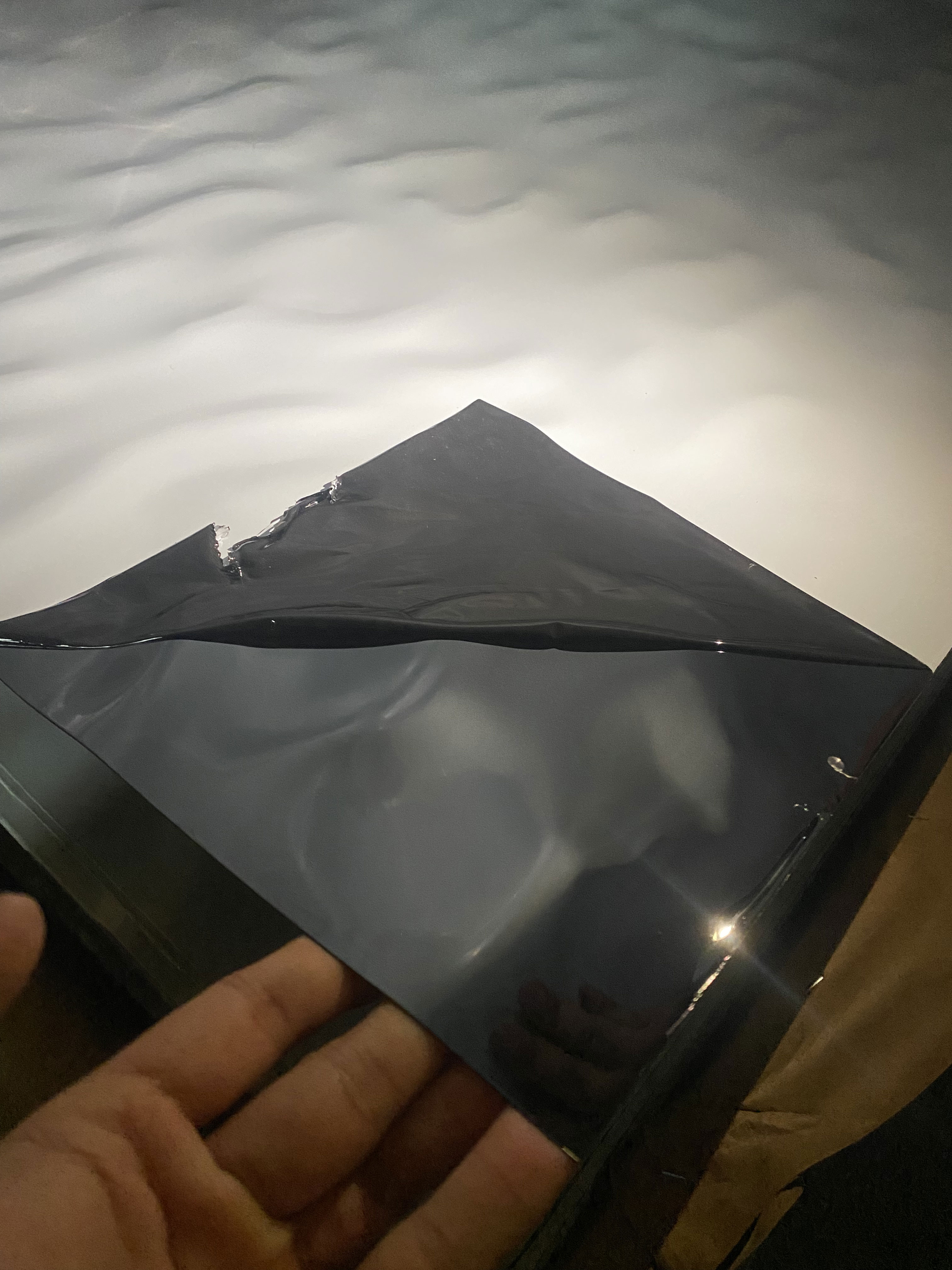
Silver, gold, rose gold, black, blue, copper and custom colours are available, covering the tones most often requested for hotel and club interiors. Colours are produced by PVD coating, which the International Stainless Steel Forum identifies as the industry standard process for coloured architectural stainless steel. JYF's project records describe PVD-coated finishes as wear-resistant and fade-proof, which matters on high-touch surfaces such as lift surrounds and reception desks. Colour consistency is also listed as a standard requirement for wall, ceiling and edge systems, so panels for a single elevation should be produced and shipped as one batch wherever the programme allows.
What sits behind and around the sheet
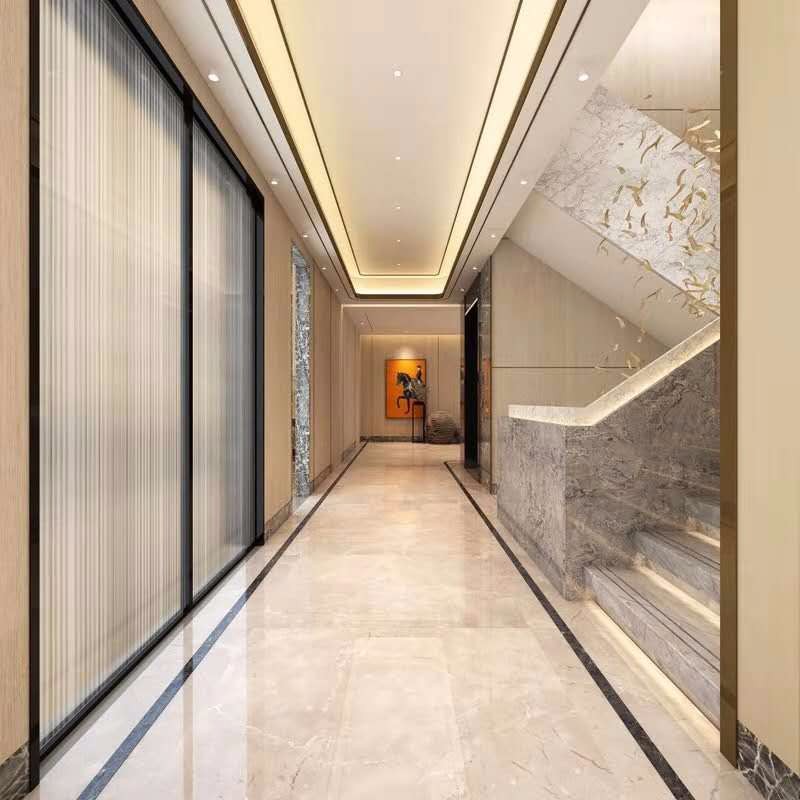
Ripple sheet is part of a system, not a standalone product. JYF's application data for sheet-based decoration lists frameworks, backing panels including honeycomb substrate, and LED light strips as matched elements, with dry-hanging and adhesive fixing as the two installation modes. Edge and joint treatment is handled in the trim range (JYF-06), which covers L, U, T, V, curved, corner, flat strip and skirting profiles in matching colours and finishes — the components that close ceiling joints and wall edges where the ripple sheet stops. Where an interior continues beyond the ripple surface, the same palette covers stainless steel wall panels, ceiling panels, room dividers and laser-cut screens (JYF-05), trims and skirting boards (JYF-06), and custom items such as bar counters, column cladding and metal sculptures (JYF-07).
Step-by-Step: Specifying Water Ripple Sheet for a Hotel Ceiling or Feature Wall
Step 1 — Fix the surface and the module grid
Decide first whether the ripple surface is a ceiling field, a wall elevation, a column casing or a lift surround, then set the module grid. JYF's application data groups these as wall panels, column wrapping, elevator decoration and ceilings, and each has a different tolerance profile: a ceiling is judged from below across a long sight line, while a feature wall is judged at close range in a corridor or lobby.
Step 2 — Select the stainless grade
Use SS304 as the default for interior hospitality surfaces, move to SS316 where the surface faces humid, coastal or exterior-adjacent conditions, and use SS201 where the environment is dry and controlled and cost is the primary constraint. Confirm the choice against the project location and what sits behind the surface.
Step 3 — Set the thickness within 0.5–2.0 mm
Match thickness to the fixing method: substrate-backed or bonded panels allow lighter gauges, while dry-hung modules and larger panel sizes call for heavier gauges. Confirm thickness together with the framing or honeycomb substrate so the sheet, the backing and the joint detail are designed as one assembly rather than three separate purchases.
Step 4 — Choose ripple scale and colour, then validate on a sample
Select from small, medium, large and flow patterns, and from silver, gold, rose gold, black, blue, copper or custom colours, then validate the combination physically. Ripple sheet is a light-reactive surface: the same panel reads differently under cove lighting, spot lighting and daylight, so a sample under project lighting is the practical way to lock the specification.
Step 5 — Build the layout on standard dimensions
Lay out the ceiling or wall on 1000 × 2000 mm, 1220 × 2440 mm or 1220 × 3050 mm modules, and identify where custom sizes are genuinely required. Fewer joints mean fewer alignment risks; the French ceiling project in JYF's records required seamless, precise joint installation, which is achieved through layout first and installation second.
Step 6 — Define fixing, edges and interfaces
Specify dry-hanging on framework or adhesive fixing on a prepared substrate, and coordinate the interfaces: trims from the JYF-06 range for edges and joints, lighting positions, access points, and the transition to adjacent materials such as stone, timber or glass.
Step 7 — Confirm quality documentation and the delivery schedule
Ask for the inspection record before shipment. JYF applies 100% pre-shipment testing and supports third-party inspection, and holds ISO 9001 certification — certificate 120526Q00119R000, issued by Guangdong Jingwel International Certification Ltd., valid from 15 May 2026 to 14 May 2029, covering the R&D and production of stainless steel coloured boards, metal decorative moldings and metal decorative articles under GB/T 19001-2016 / ISO 9001:2015. Plan the programme around the sheet lead time of 7–10 days for decorative stainless steel sheets, and note that trims (15–20 days), screen partitions (20 days) and custom fabricated items (25–30 days) run longer, so the longest item sets the delivery date.
Use Cases: Ripple Sheet on Ceilings and Feature Walls

Two projects in JYF Metal's records show how the material is used in practice.
Korea — 120 ripple sheets for ceiling and wall decoration. A designer specified 120 pieces of water ripple stainless steel sheet for combined ceiling and wall decoration, with a recorded project duration of 5–10 years. The recorded result is a smooth, reflective wave-patterned surface suited to both ceilings and feature walls, creating a modern, dynamic interior; the recorded highlights list a durable stainless steel finish, an elegant water-wave texture, easy cleaning and maintenance, and customizable size and pattern.
France — 80 ripple sheets for ceiling decoration. A designer ordered 80 pieces of water ripple sheet for a ceiling installation, again with a recorded duration of 5–10 years. The recorded result is the outcome most specifiers are looking for: the installation delivered the intended effect with seamless joints and a scratch-free surface. The highlights describe a dynamic, shimmering water-ripple effect under light, PVD coating for wear-resistant and fade-proof colour, exceptional flatness for seamless and precise joint installation, and a surface that resists dust and stains with minimal maintenance.
Translated into a hospitality layout, that performance corresponds to a small set of typical positions: lobby and atrium ceiling fields, corridor and lift-lobby feature walls, column casings, lift interiors, and bar or restaurant backdrops where ripple sheet is combined with custom fabrication such as bar counters and display units.
Comparison: Decorative Sheet Ranges and Surface Planning
Ripple is one finish within a broader sheet family. The table below uses JYF Metal's published product parameters, so a specifier can see at a glance where the water ripple option differs from mirror, brushed and sandblasted sheets.
| Model | Surface finish | Thickness range | Pattern options | Standard sizes | Colours |
|---|---|---|---|---|---|
| JYF-01 | Mirror finish stainless steel sheet | 0.5–3.0 mm | None | 1000 × 2000 / 1220 × 2440 / 1220 × 3050 mm | Silver, gold, rose gold, black, blue, copper, custom |
| JYF-02 | Brushed stainless steel sheet (hairline, satin, No.4, vibration) | 0.5–3.0 mm | None | 1000 × 2000 / 1220 × 2440 / 1220 × 3050 mm | Silver, gold, rose gold, black, blue, copper, bronze, custom |
| JYF-03 | Sandblasted stainless steel sheet | 0.5–3.0 mm | None | 1000 × 2000 / 1220 × 2440 / 1220 × 3050 mm | Silver, gold, rose gold, black, blue, copper, custom |
| JYF-04 | Water ripple stainless steel sheet | 0.5–2.0 mm | Small, medium, large, flow | 1000 × 2000 / 1220 × 2440 / 1220 × 3050 mm | Silver, gold, rose gold, black, blue, copper, custom |
Source: JYF Metal product specification data for models JYF-01 to JYF-04. All four ranges are produced in SS201, SS304 and SS316 and are listed for architectural applications.
| Hospitality surface | Element specified | Constraint to confirm before production |
|---|---|---|
| Lobby or atrium ceiling field | JYF-04 ripple panels on framing | Panel flatness across joints; layout on 1000 × 2000 / 1220 × 2440 / 1220 × 3050 mm modules; lighting position |
| Corridor or lift-lobby feature wall | JYF-04 ripple wall cladding | Colour consistency between panels; pattern orientation; scratch resistance through installation |
| Column cladding | Ripple sheet built through the JYF-07 custom fabrication range | Sheet width against column curvature; corner detail using JYF-06 trims |
| Lift interiors | Decorative stainless steel panels, including elevator decorative panels | Precise dimensions and dimensional accuracy in a high-traffic area |
| Bar and restaurant backdrops | Ripple sheet combined with custom fabrication such as bar counters | Fixing method (dry-hanging or adhesive) and substrate preparation |
Constraints are drawn from JYF Metal's application data for decorative sheet and custom fabrication systems. The surface mapping is a planning aid and should be confirmed against project drawings.
FAQ: Water Ripple Stainless Steel Sheets for Hospitality Projects
Which certification should be verified on a water ripple sheet order?
JYF Metal holds an ISO 9001 quality management system certificate, number 120526Q00119R000, issued by Guangdong Jingwel International Certification Ltd. and valid from 15 May 2026 to 14 May 2029. The certificate covers the R&D and production of stainless steel coloured boards, metal decorative moldings and metal decorative articles, and references GB/T 19001-2016 / ISO 9001:2015. Because decorative stainless tubes and flat products are commonly manufactured to public standards such as ASTM A480 (general requirements for flat-rolled stainless steel) and ASTM A554 (mechanical tubing), buyers can reference those documents in the specification. The inspection record should also be confirmed: JYF applies 100% pre-shipment testing and supports third-party inspection.
Can the ripple pattern, panel size and colour be customized?
Yes. JYF Metal operates an OEM/ODM model with customization of size, colour, protective film and logo. In the JYF-04 range, that covers ripple scale (small, medium, large, flow), colour (silver, gold, rose gold, black, blue, copper or custom), sheet size beyond the three standard formats (1000 × 2000 mm, 1220 × 2440 mm, 1220 × 3050 mm) and thickness within 0.5–2.0 mm. Production runs on a PVD vacuum plating line alongside German Trumpf laser cutting, CNC bending and precision welding equipment, supported by a 15-engineer R&D team that handles drawing optimisation and complex shapes.
What drives the cost of a water ripple sheet order?
Pricing is quoted per project, and four variables dominate it: the stainless grade (SS201, SS304 or SS316), the thickness selected within 0.5–2.0 mm, the panel dimensions and the share of non-standard cutting, and the surface treatment — gold, rose gold and black surfaces are produced with PVD coating, the industry-standard process for coloured architectural stainless steel. Order structure matters as well: the MOQ for decorative stainless steel sheets is 15 sheets per type. A project built on standard 1220 × 2440 mm modules in a single colour therefore presents a different commercial profile from one that specifies multiple colours and custom sizes.
Can we validate the finish on a sample before full production?
Yes. Sample provision is part of JYF Metal's service list, alongside online installation guidance and replacement parts. For ripple sheet, a physical sample is more reliable than a render or a catalogue photograph, because the pattern changes with viewing distance and light angle — the same surface that reads as a subtle texture on a ceiling can look pronounced on a corridor wall. Sample validation should confirm ripple scale, colour and gloss under the project's lighting before the full order is released.
What is the lead time, and how should delivery be planned?
Decorative stainless steel sheets have a lead time of 7–10 days. Other items in the same package run longer: stainless steel trims take 15–20 days, screen partitions 20 days, and custom products 25–30 days. Because a ripple ceiling is normally installed with trims, framing and lighting, the programme should be planned around the longest item rather than the sheet order alone. To move from specification to a quotation, send your drawings, surface schedule and required grade to lucky.ceo@jyfmetal.com, or request a sample together with the JYF Metal project handbook.
Conclusion
Water ripple stainless steel sheet performs well on hospitality ceilings and feature walls when three things are settled early: the grade matched to the environment, the thickness matched to the fixing method and module size, and the ripple scale validated on a sample under the project's lighting. Colours, panel sizes, trims and edge details follow from those decisions.
JYF Metal produces the JYF-04 water ripple range in SS201, SS304 and SS316, in 0.5–2.0 mm, in three standard sheet formats with custom sizes available, in six standard colours plus custom, with a 7–10 day lead time on decorative sheets and an ISO 9001 certified production process. Its project records include ceiling and wall installations delivered for designers in Korea and France, where flatness, seamless joints and fade-resistant colour were the recorded highlights.
Next step: sample, quotation or project handbook
Send your ceiling or feature-wall drawings, the required stainless grade and the surface area to JYF Metal, and request a physical water ripple sample in the colour and ripple scale you are considering.
Email: lucky.ceo@jyfmetal.com
Tel / WhatsApp: +86 133-8020-9777 | Chat on WhatsApp
Website: www.jyf-metal.com
Project handbook (PDF): Designer's Handbook & Project Cases
Foshan Jinyifan Metal Products Co., Ltd. — 3A, Building 4, Block B, LIYUAN Metal Mall, No. 38 Gongye 3rd Road, Tanzhou Industrial Zone, Chencun Town, Shunde District, Foshan City, Guangdong Province, China.
Have Questions or Need More Details?
Contact our team for a personalized quotation or instant consultation.
Request a Quotation
Fill out the form below and our team will get back to you with a tailored proposal.
WhatsApp Direct Chat
Prefer to chat in real-time? Message us on WhatsApp for instant assistance & quick answers.
- Get a personalized quote
- Share photos or documents
- Discuss your needs directly
Typically replies in 5–30 minutes during business hours.