
Mirror vs. Brushed vs. Sandblasted Stainless Steel Sheets: How to Choose the Right Finish
Mirror vs. Brushed vs. Sandblasted Stainless Steel Sheets: How to Choose the Right Finish
Mirror, brushed and sandblasted stainless steel sheets are made from the same base metal and differ only in surface. Mirror finishes (JYF-01) reflect images and are chosen where a surface should read as bright and continuous. Brushed finishes (JYF-02) carry a directional grain that scatters light and absorbs the visual impact of daily contact. Sandblasted finishes (JYF-03) produce a uniform matte face that removes glare and reflection. The decision between them is therefore about light, wear and protection, not about which finish is better.
This comparison guide is written for architects, interior designers, contractors and buyers specifying architectural stainless steel decoration at the decision stage. It compares the three finishes on surface behaviour, typical architectural applications, available base materials (SS201, SS304, SS316) and the common thickness and sheet formats of 0.5–3.0 mm, 1000×2000 mm, 1220×2440 mm and 1220×3050 mm. The surface references JYF-01, JYF-02 and JYF-03 are used throughout because they are the three decorative sheet finishes offered by JYF Metal (Foshan Jinyifan Metal Products Co., Ltd.), a metal decoration manufacturer established in 2013 in Foshan, Guangdong, China, producing colored stainless steel sheets, tile trims, screen partitions and engineered custom metalwork for hotel and commercial projects.
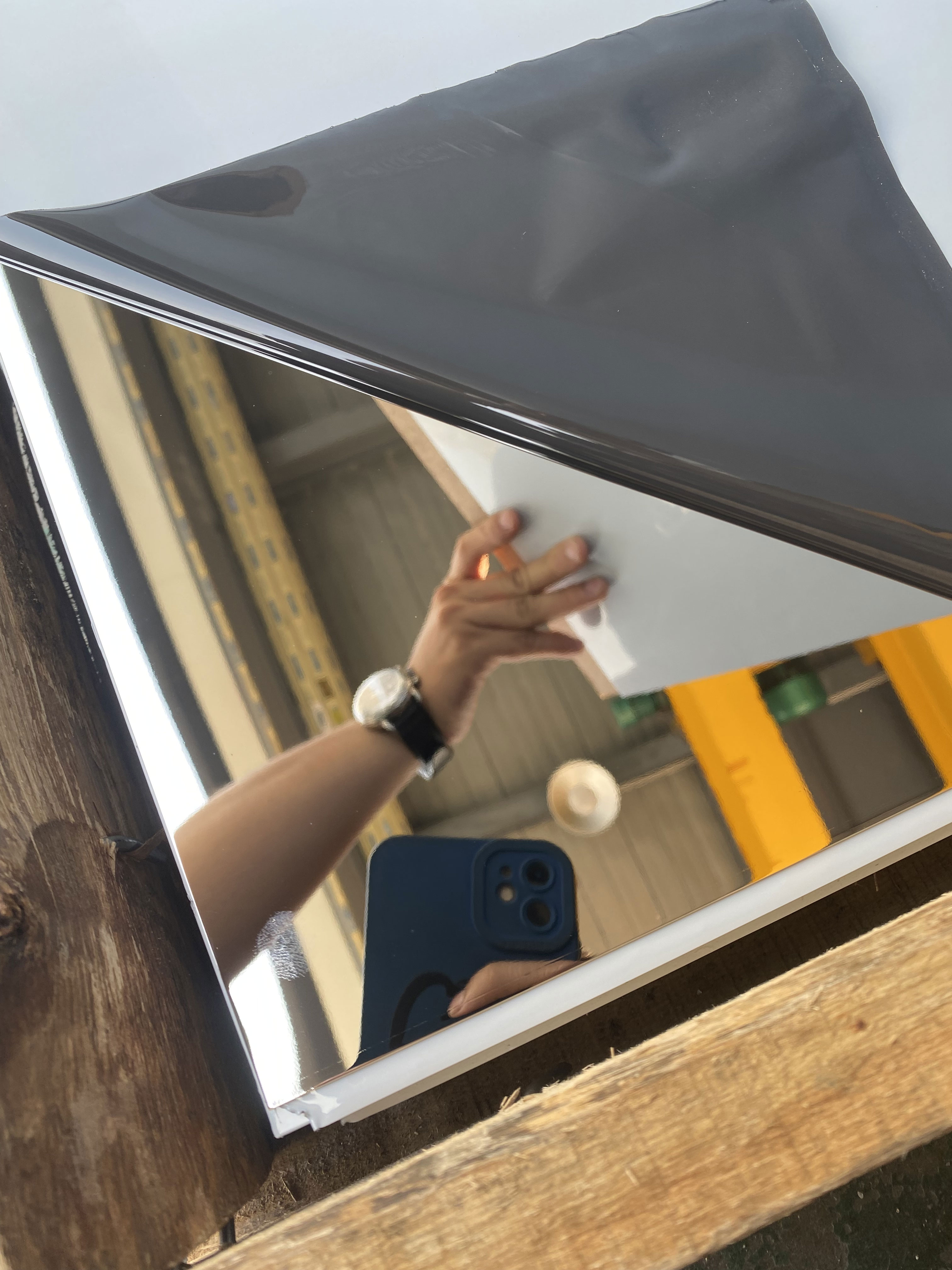
Problem definition: why finish decisions go wrong on site
Most finish disputes are not caused by defective material. They come from three predictable gaps between the approved sample and the installed elevation.
- Incomplete specification language. "Brushed" is not a specification on its own. A finish is only defined when the base grade, the grain direction and the color coating, if any, are fixed alongside it. Two sheets that are both described as brushed can read very differently when the grain runs in opposite directions on adjacent panels.
- Lighting change. A finish approved under showroom spotlights is not the same finish seen under a high daylight atrium or a continuous linear LED cove. Mirror surfaces amplify every deviation in lighting and panel flatness; sandblasted surfaces flatten it out.
- Handling and protection. The distance between a finished sheet and an installed panel includes transport, storage, cutting, bending and installation. Mirror faces record every one of those stages, brushed faces visually absorb most of it, and sandblasted faces sit between the two.
A finish decision is therefore a decision about exposure. The question is not which surface looks best in a catalogue, but which surface still looks correct after handling, installation and two years of daily use in a specific space.
Industry background: why sheet finishes matter more than they used to
The global metal decorative panel market was valued at USD 3.5 billion in 2024 and is projected to reach USD 5.8 billion by 2032 (SMR / Metal Decorative Panel Market Outlook). Growth is concentrated where visible metal surfaces carry architectural intent rather than only structural function.
Two technical trends sit behind that demand. First, architectural cladding and facades are a primary driver of stainless steel demand in construction, specifically for 300-series grades (Market Research Future). Second, PVD (Physical Vapor Deposition) coating is the industry standard for creating colored stainless steel sheets for architectural use in gold, rose gold and black (International Stainless Steel Forum). In other words, the market has moved from raw sheet to finished surface: buyers now select grade and surface in the same conversation.
Supply is geographically concentrated. Asia-Pacific accounts for approximately 69% of global stainless steel market revenue in 2025, driven by rapid urbanisation (Grand View Research), and production hubs for value-added finishing such as water ripple stainless steel sheet are centred in Foshan, China (Stainless Steel World Asia). For buyers this concentration is practical: the same region that rolls the base metal also performs the finishing, which is why finish consistency and batch control are usually discussed with the finishing plant rather than with the mill.
On the panel side, metal honeycomb boards hold a significant market share because of their strength-to-weight ratio in facade and interior applications (SNS Insider) — relevant when a reflective surface treatment such as mirror is paired with a large panel format.
The three finishes, described by how they behave
Each finish reference below answers the same three questions: what the surface does with light, where it is normally specified, and what it demands from the project.
JYF-01 mirror finish
A mirror finish is produced by progressively polishing the stainless sheet until the surface reflects images clearly. In architecture it is used where the surface itself is the visual event — lift lobbies, feature walls, ceilings, column cladding, bar counters and stainless steel sculpture. The behaviour to plan around is fidelity: a mirror face reflects lighting conditions back into the room and shows out-of-flatness, joints and transit damage without softening them. It rewards projects that can protect panels during handling and that have site lighting under control.
JYF-02 brushed finish
A brushed finish carries a fine directional grain across the sheet. Because the grain scatters light along one axis, the surface reads as a soft satin rather than a reflection, and light marks that would stand out on a mirror blend into the texture. This is the finish most often specified for stainless steel elevator panels, wall panels, stainless steel trim, skirting and partitions — surfaces that are touched, cleaned and inspected daily. The main discipline is directional consistency: grains should run the same way across adjoining panels unless a deliberate change of direction is part of the design.
JYF-03 sandblasted finish
Sandblasting produces a uniform matte surface by projecting abrasive media onto the sheet. The result reflects almost no image and distributes light evenly, which makes it useful on large elevations and ceilings where a continuous low-contrast field is wanted and where glare would otherwise be a problem. Its visual character is quiet rather than bright, so it is often combined with a polished or PVD colored element to create contrast within the same composition.
All three references are available as plain stainless or with a PVD color coating. JYF Metal\u2019s colored sheet range includes black titanium, titanium gold, rose gold and sapphire blue stainless steel colored sheet, produced on a PVD vacuum plating line at its Foshan facility.
Materials, thickness and sheet sizes available across the three finishes
Finish and base grade are independent decisions, and buyers should not let one dictate the other. All three finishes (JYF-01, JYF-02 and JYF-03) can be applied to the base materials JYF Metal works with:
- Base materials: stainless steel SS201, SS304, SS316 and 430, plus copper and aluminum.
- Thickness range: 0.5–3.0 mm for decorative sheets.
- Standard sheet formats: 1000×2000 mm, 1220×2440 mm and 1220×3050 mm.
- Color options: PVD coated stainless steel sheet in black titanium, titanium gold, rose gold and sapphire blue, among other colors.
SS201, SS304 and SS316 differ mainly in corrosion resistance. For interior decorative surfaces, SS201 and SS304 are common; where the environment is more demanding — exterior facades, coastal air, wet areas — the specification usually moves to SS304 or SS316, and the grade conversation then matters more than the finish conversation. Flat-rolled stainless decorative products are commonly referenced against ASTM A480 for general requirements, and mechanical tubing against ASTM A554 (ASTM International). JYF Metal operates an ISO 9001 quality system covering incoming material through finished goods.
Step-by-step: choosing between mirror, brushed and sandblasted
- Start with the light, not the finish. Decide whether the surface should reflect, diffuse or absorb light. Spaces with strong direct light and complex geometry usually tolerate brushed or sandblasted better than mirror, which will show every lighting irregularity.
- Set the contact and maintenance expectation. High-touch surfaces — elevator panels, door surrounds, trim, skirting and counters — generally point to brushed finishes. Low-touch surfaces and display elevations can carry mirror.
- Select the base grade by environment. Interior dry areas and demanding exterior or coastal conditions should not share the same grade. Match the grade to the exposure first, then apply the finish on top of that decision.
- Confirm thickness and sheet format against the panel module. With 0.5–3.0 mm and the 1000×2000 mm, 1220×2440 mm and 1220×3050 mm formats, the sheet should be chosen so the joint layout minimises visible seams — on mirror and sandblasted fields a badly placed joint is more visible than the finish itself.
- Decide whether a colored coating is needed. If the design calls for gold, rose gold or black, specify PVD coating rather than paint, since PVD is the standard process for architectural colored stainless surfaces.
- Approve a physical sample under project lighting. Approve grain direction, reflection level and color under the actual lighting temperature and viewing angle of the space, then lock that sample as the production reference.
- Lock protection and packaging at the same time. Finish performance is decided as much in transit as in production. Specify protective film, scratch-proof packaging and a replacement-panel allowance before the order is released.
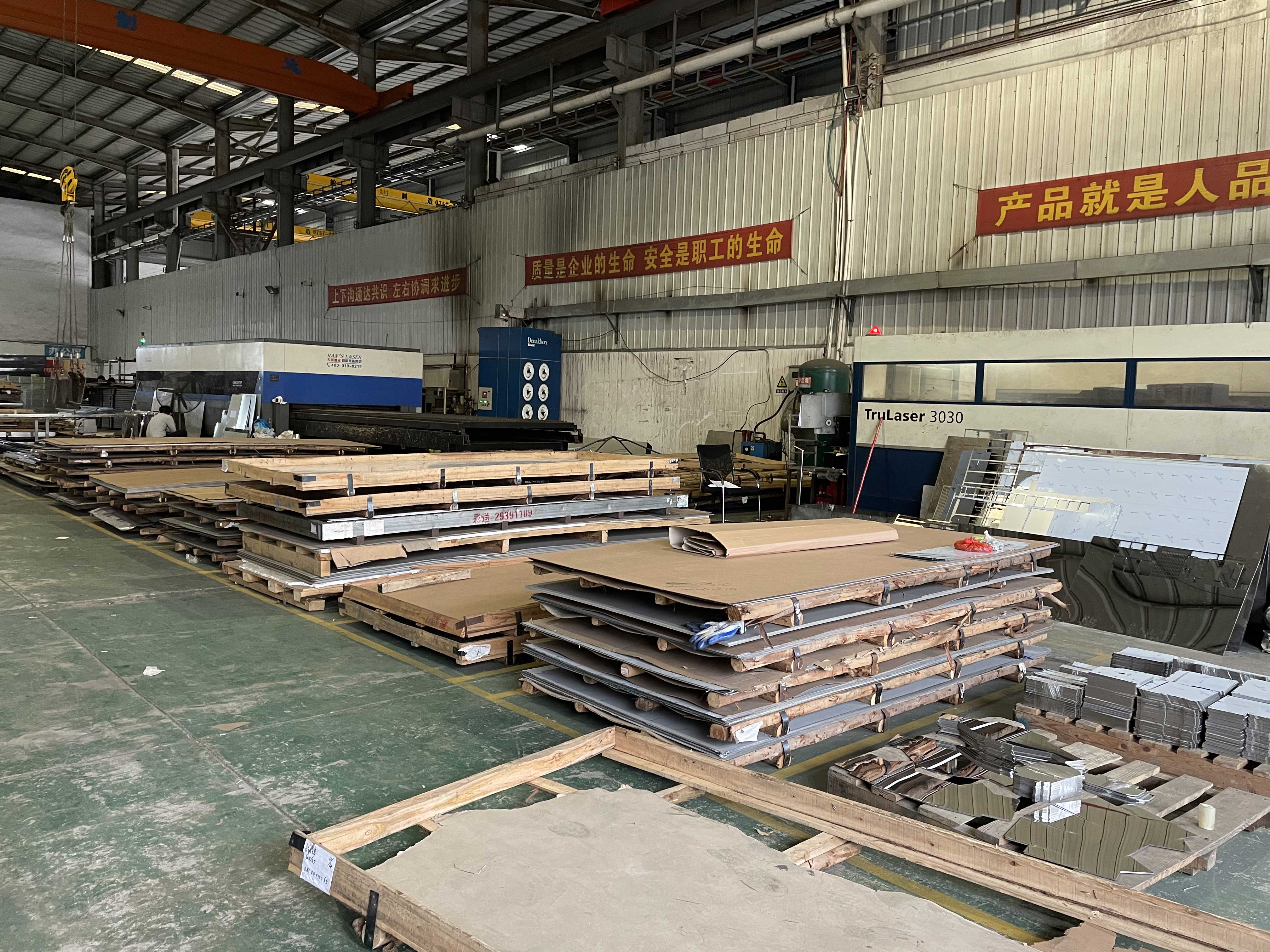
Application map: where each finish earns its place
The mapping below follows common architectural practice. It is a starting point for specification and should be confirmed against project lighting, maintenance access and the approved sample.
| Application | Mirror (JYF-01) | Brushed (JYF-02) | Sandblasted (JYF-03) |
|---|---|---|---|
| Elevator interiors and door panels | Accent doors and reveals | Primary panel surface | Large flat fields where glare must be avoided |
| Wall cladding and feature walls | Statement walls with controlled lighting | General wall panels and stainless steel trim | Large continuous elevations |
| Ceilings | Reflective ceilings and cove details | Ceiling trims and transitions | Matte ceiling fields |
| Column cladding | High-visibility stainless steel column cladding | Columns with daily contact | Columns in low-glare schemes |
| Screens and partitions | Accent inserts | Laser cut stainless steel screen bodies | Backing panels behind cut patterns |
| Bar counters, trim and skirting | Counter fronts | Stainless steel trim, skirting boards and counter edges | Recessed details and shadow gaps |
| Facade and exterior elements | Limited use, with strict protection and grade selection | Cladding and stainless steel facade system panels | Low-glare facade surfaces |
In practice, most high-quality projects do not choose one finish. They use brushed surfaces as the working field, mirror or PVD colored elements as the accent, and sandblasted panels where glare and visual noise need to be reduced. JYF Metal produces across four systems — wall decoration (colored stainless steel panels, ripple pattern panels, embossed decorative wall panels, perforated metal panels and metal curtain wall panels), ceilings (ceiling ripple panels, stainless steel honeycomb panels and double-curved ceilings), commercial space (metal screens and partitions, metal door frames, column cladding, custom-shaped metal bar counters and metal art sculptures) and floors (metal floor trims and stainless steel skirting) — so all three finishes can be produced within one supply chain rather than sourced from separate finishing workshops.
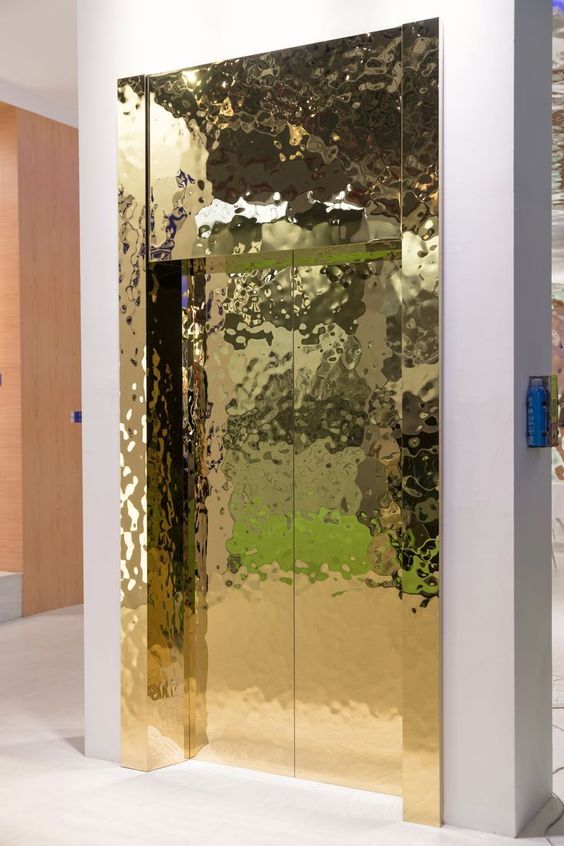
Comparison table: mirror vs. brushed vs. sandblasted at a glance
| Attribute | Mirror — JYF-01 | Brushed — JYF-02 | Sandblasted — JYF-03 |
|---|---|---|---|
| Surface appearance | Near-image reflection; bright and continuous | Directional satin grain | Uniform matte, non-reflective |
| Light behaviour | High specular reflection | Scatters light along the grain | Diffuse and glare-free |
| Visibility of handling marks | Highest sensitivity to scratches and fingerprints | Grain visually absorbs light marks | Texture reduces the visual impact of light marks |
| Most common applications | Feature walls, ceilings, column cladding, bar counters, sculpture | Elevator interiors, wall panels, trim, skirting, partitions | Large wall and ceiling fields, low-glare facades |
| Available materials | SS201, SS304, SS316, 430 | SS201, SS304, SS316, 430 | SS201, SS304, SS316, 430 |
| Thickness | 0.5–3.0 mm | 0.5–3.0 mm | 0.5–3.0 mm |
| Sheet formats | 1000×2000, 1220×2440, 1220×3050 mm | 1000×2000, 1220×2440, 1220×3050 mm | 1000×2000, 1220×2440, 1220×3050 mm |
| PVD color options | Black titanium, titanium gold, rose gold, sapphire blue and other colors | Same PVD color range | Same PVD color range |
| Protection demands | Highest — film, careful handling, replacement allowance | Moderate | Moderate |
The table shows why finish selection is rarely a simple aesthetic preference. The three finishes share the same materials, thickness range and sheet formats, so the decision narrows to how the surface behaves under light and contact, and how much protection the project can realistically maintain between the factory and handover.
Where the finish decision pays off: decorative stainless steel vs. alternative materials
Finish choice also sits inside a larger material decision. When decorative stainless steel panels are compared with the materials they typically replace — aluminum panels, painted gypsum boards, laminated wood panels and PVC decorative sheets — the case is built on service life and maintenance rather than first cost.
| Comparison | Alternative materials | Service life | Key performance | Cost profile |
|---|---|---|---|---|
| Decorative stainless steel panels | Aluminum panels, painted gypsum boards, laminated wood panels, PVC decorative sheets | 15–25 years vs. 5–12 years | Scratch resistance improved by approximately 3 times; flatness deviation under 1 mm/m; no repainting required | Upfront cost roughly 30–60% higher; repainting and repair costs significantly reduced over time |
| Stainless steel screens and partitions | Wood partitions, MDF screens, iron decorative partitions, glass-only partitions | 10–20 years vs. 3–8 years | Deformation rate reduced by approximately 60%; maintenance frequency reduced by approximately 70%; fingerprint-resistant finishing available | Initial cost 20–40% higher; lifecycle replacement cost 50–70% lower |
| Stainless steel trim and skirting | PVC strips, aluminum trims, painted wood moldings | 10–20 years vs. 2–8 years | Deformation resistance improved by approximately 4 times; edge cracking rate near zero | Initial cost 20–50% higher; replacement cycles reduced 3–5 times |
Two practical notes follow from this. First, decorative stainless steel is typically specified for hotel wall cladding, elevator interiors, shopping mall facades, luxury retail stores and airport interiors, where replacement is expensive and disruptive. Second, the optional lightweight honeycomb structure reduces building load, which matters when large-format mirror or sandblasted panels are used at height.
FAQ: mirror, brushed and sandblasted stainless steel sheets
Which stainless steel grades and standards apply to decorative sheets?
JYF Metal produces decorative sheets and fabricated elements in stainless steel SS201, SS304, SS316 and 430, as well as copper and aluminum. Grade is a corrosion decision and should be matched to exposure: interior dry areas and demanding exterior or coastal conditions should not share the same specification. Flat-rolled stainless decorative products are commonly referenced against ASTM A480 for general requirements and mechanical tubing against ASTM A554 (ASTM International), and 300-series grades are the primary driver of stainless steel demand in architectural cladding and facades (Market Research Future). JYF Metal operates an ISO 9001 quality system covering incoming material inspection through finished goods.
Can mirror, brushed and sandblasted finishes be combined in one project?
Yes, and on most high-end commercial interiors they usually are. The typical composition uses brushed surfaces as the working field, mirror or PVD colored elements as accents, and sandblasted panels where glare must be reduced. Producing all three within one supply chain keeps grain direction, color and reflection level consistent across the package. JYF Metal\u2019s equipment includes Trumpf laser cutting machines from Germany, high-precision CNC bending machines, seamless precision welding equipment and a PVD vacuum plating line, and the company supports custom fabrication from drawings or samples as part of its turnkey process — design planning, drawing development, prototype production, mass manufacturing, quality control and global delivery.
Do the three finishes cost the same?
No, but the difference appears mainly in handling and processing rather than in the base sheet. Mirror surfaces require the most protection during fabrication, transport and installation and have the least tolerance for rework. Sandblasting adds a dedicated surface process and PVD coating adds another. Those effects should be read against lifecycle cost rather than unit price: compared with aluminum panels, painted gypsum boards, laminated wood panels and PVC decorative sheets, decorative stainless steel panels carry roughly 30–60% higher upfront cost but significantly reduce repainting and repair costs over time. For screens and partitions, initial cost is 20–40% higher while lifecycle replacement cost is 50–70% lower.
How should a finish be validated before a full order?
Validate with a physical sample viewed under the project\u2019s lighting temperature and angle, then lock that sample as the production reference. JYF Metal runs protective testing before coating, sandblasting or antiquing, uses CNC machining to hold dimensional accuracy, and carries out full inspection before shipment with scratch-proof packaging. Custom orders can be produced from drawings or samples, and on-site factory inspection is supported. For combined-finish packages, approve grain direction and color together with the finish, since these are what a client notices first on site.
What affects lead time and delivery for finished sheets?
Lead time is driven less by the finishing step itself than by material inspection, production scheduling and packaging discipline. JYF Metal manages production scheduling with client-visible order tracking, inspects incoming material to confirm that 304/316 stainless steel meets specification, and ships with scratch-proof packaging designed for finished decorative surfaces. Export clearance and logistics coordination are handled within the same process, with 80% of output exported to markets in the Middle East, Asia, Europe and North America. Moving from comparison to decision usually means sending drawings and lighting conditions for a finish recommendation and a physical sample.
Conclusion
Mirror, brushed and sandblasted stainless steel sheets are not competitors for the same surface. They are three answers to three different briefs: reflect the space, absorb daily contact, or remove glare. Because all three are available in the same base materials (SS201, SS304, SS316 and 430), the same 0.5–3.0 mm thickness range and the same 1000×2000 mm, 1220×2440 mm and 1220×3050 mm sheet formats, the choice is settled by light, contact and protection rather than availability.
The most reliable sequence for a decision-stage project is to fix the light behaviour first, set the grade by exposure second, confirm thickness and joint layout third, and approve a physical sample under project lighting before releasing production. Mirror finishes reward controlled lighting and disciplined handling; brushed finishes reward projects with daily contact and practical maintenance; sandblasted finishes reward large elevations that must stay quiet and glare-free. Combined correctly, the three finishes give a scheme depth rather than a single-tone surface — which is usually what buyers mean when they ask which finish is best.
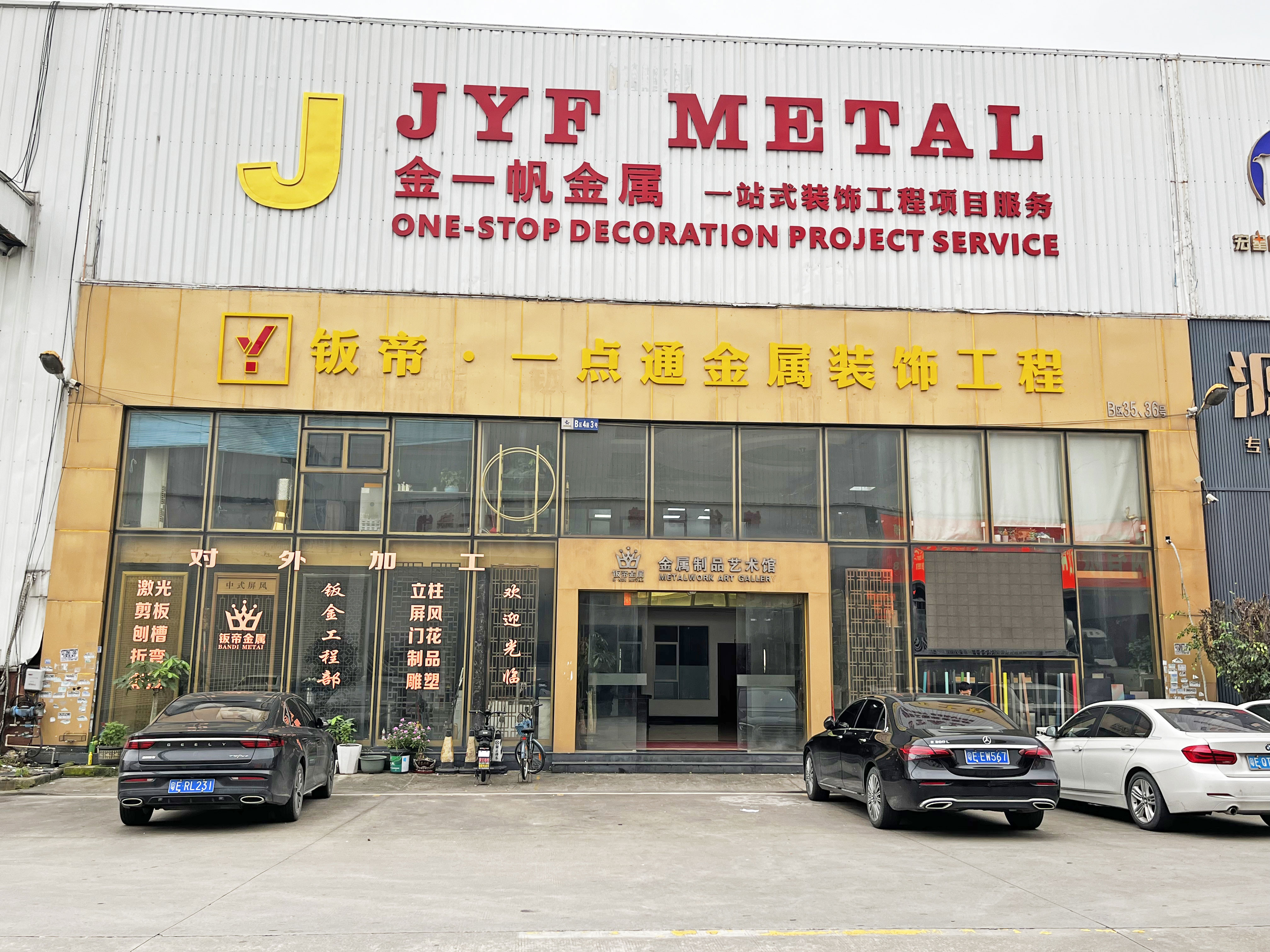
Next step
JYF Metal (Foshan Jinyifan Metal Products Co., Ltd.) supplies JYF-01 mirror, JYF-02 brushed and JYF-03 sandblasted decorative stainless steel sheets in SS201, SS304, SS316 and 430, with PVD colors, custom fabrication from drawings or samples, and export support for projects worldwide.
Download the Designer\u2019s Handbook & Project Cases, or request a sample and quotation for your finish specification.
Contact: Lucky Zou — lucky.ceo@jyfmetal.com | Tel / WhatsApp: +86 133-8020-9777 | www.jyf-metal.com | blog.jyf-metal.com
Have Questions or Need More Details?
Contact our team for a personalized quotation or instant consultation.
Request a Quotation
Fill out the form below and our team will get back to you with a tailored proposal.
WhatsApp Direct Chat
Prefer to chat in real-time? Message us on WhatsApp for instant assistance & quick answers.
- Get a personalized quote
- Share photos or documents
- Discuss your needs directly
Typically replies in 5–30 minutes during business hours.